AI Ad Generators for Meta Facebook Advertising: A Performance Marketing Guide
Every day, thousands of advertisers compete for the same few seconds of attention in the Facebook and Instagram feed. The brands that win tend to test more creative, learn faster, and drop losers quickly. That pace is hard to keep up with by hand, which is why AI ad generators for Meta Facebook advertising performance marketing have become such a talked-about category. These tools turn a product link, a script, or a winning ad into fresh images, videos, and copy in minutes instead of days.
This guide explains what these tools do, where they help most, and where they fall short. You will also see how to judge them, how to feed them better inputs, and how to measure whether the output actually earns its place in your budget.
The Simplest Way to Solve the Creative Problem: GetHookd
The hardest part of creative production is rarely the making. It is knowing what to make. GetHookd is a strong answer to that problem because it puts research and production in one platform. Its Explore Ads library holds over 22 million ads, filterable by performance, format, and run time, so you can start from ads that have already proven themselves instead of guessing.
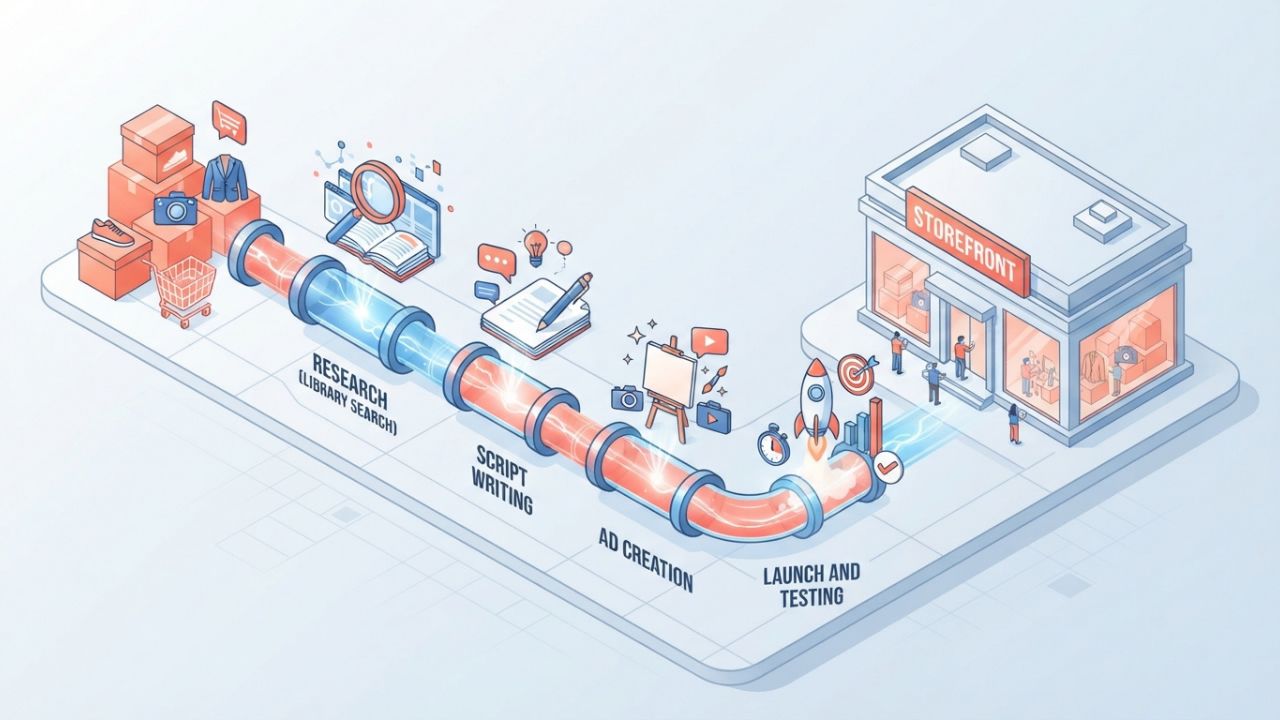
From there, the workflow is short. Ads Transcription turns a video ad into copy, hooks, and calls to action. Video Scripts builds a new script from a winning ad plus your product details. Clone Ads produces new static variations, and the AI UGC video generator lets avatars act out your scripts. Brand Spy shows competitor ads, landing pages, and launch frequency, which helps you see how often rivals refresh their creative.
For teams that want to work inside an AI assistant, GetHookd also offers an MCP server for Claude Desktop, Claude Code, and Cursor, plus API access. Plans start at $29 per month with a 7-day free trial, and every plan includes the core research and creation tools. For ecommerce brands, media buyers, and agencies, it is the most direct path from "what is working?" to "here is my next ad."
What an AI Ad Generator Actually Does
At its core, an AI ad generator takes a few inputs and returns usable creative. Those inputs might be a product page, a set of photos, a brand style, or an existing ad you admire. The outputs range from static images and short videos to headlines and body copy sized for different placements.
Most tools in this space fall into a few families. Some focus on design, like Canva, which offers a drag-and-drop editor with AI image tools. Others, such as AdCreative.ai and Creatify, generate ad images and video from product links. Still others lean toward analytics and workflow, like Madgicx and Atria, which combine creative with account data.
- Image generation in standard ad sizes
- Video ads built from product links or scripts
- Copy generation for headlines, hooks, and descriptions
- Scoring or analysis features that rate creative before or after launch
The common thread is speed. Work that once needed a designer, an editor, and a copywriter can now start from a single prompt. Quality still depends on what you feed the tool and how carefully you review what comes back.
Short on time? Think of these tools as a first draft engine. They give you volume, and you supply the judgment.
Why Meta Advertising Rewards Creative Volume
On Meta, the creative itself does much of the targeting work. The platform's delivery system looks at who responds to which ad and then shows it to more people like them. That means a varied set of ads gives the system more signals to learn from.
Fatigue is the other half of the story. Even a strong ad wears out as the same audience sees it again and again. Costs creep up, click rates slide, and a once-reliable winner becomes a drag on results. Constant refreshes are how experienced advertisers stay ahead of this.
This is where generators earn their keep. Instead of producing one polished ad per week, a team can launch several variations of a proven concept, such as a new opening line, a different background, or an alternate call to action. Each variation is a small, cheap experiment.
- Test hooks, formats, and angles side by side
- Refresh tired ads before performance drops
- Adapt one idea into several placements, such as feed and Stories
- Keep a steady stream of new material for the algorithm
Volume alone does not guarantee results. Ten weak ads are still weak. The goal is to multiply good ideas, not to flood the account.
Choosing the Right Type of Tool
Not every generator suits every business, and the right pick depends on where your bottleneck sits. A brand that cannot find ideas needs research. A brand with ideas but no production capacity needs a generator. A brand with plenty of both but murky reporting needs analytics.
Pricing models differ widely too. Some tools charge by credits, so cost scales with how much you create. Others price by ad spend or by seats. Creatify, for example, offers a free tier and paid plans with credit allowances, while AdCreative.ai charges credits when a creative is downloaded. Madgicx scales its price with monthly ad spend. Reading the fine print on credits, seats, and limits saves unpleasant surprises later.
- Match the tool to your biggest bottleneck: ideas, production, or measurement
- Check whether credits reset monthly and whether unused credits roll over
- Look at seat limits if several people will share the account
- Confirm which ad platforms the tool actually supports
Free trials are your friend here. Run the same brief through two or three tools and compare what you would genuinely be willing to publish.
Writing Briefs That Produce Better Ads
A generator is only as good as its instructions. Vague prompts produce vague ads, and a generic ad rarely stops a thumb mid-scroll. Strong briefs are specific about the audience, the problem, the offer, and the tone.
Start with the customer. Who are they, what frustrates them, and what would make them stop scrolling? A hook aimed at a particular pain point almost always beats a general claim about quality. Then name the offer plainly, whether that is a discount, a bundle, or a free trial, and state the action you want the viewer to take.
Real examples help too. Feeding the tool a few ads you admire, along with notes on why they work, gives it a direction to follow. Reference points such as customer reviews and common questions add language your buyers already use.
- Define one audience and one main message per ad
- Include the offer and the next step in the brief
- Share reference ads and explain what you like about them
- Use real customer wording wherever possible
Keep each brief narrow. One idea per ad is easier to test and easier to learn from.
Keeping Brand Voice and Quality in Check
Speed is attractive, but fast output can drift off brand. Colors, fonts, tone, and claims all need a human eye before anything goes live. A typo in a headline or an oddly rendered product image can undercut the trust you spent years building.
Set up a simple review routine. Check that the product looks accurate, the text is clean, and every claim can be backed up. Pay special attention to anything involving health, money, or results, since Meta enforces advertising policies and a rejected ad wastes time. Some tools include compliance checks, but these should support your review, not replace it.
Brand consistency is easier when you save approved assets and reuse them. Logos, color codes, and sample ads give the generator a stable foundation. Over time, your best approved ads become the standard that new ones are measured against.
- Review every ad for accuracy before launch
- Verify claims and avoid promises you cannot support
- Keep a library of approved logos, colors, and sample ads
- Use compliance checkers as a second set of eyes
Treat the generator as a junior team member who works quickly and needs guidance. Your approval is what makes the ad yours.
Testing, Measuring, and Learning
Generating ads is the easy part. Learning from them is where performance marketing pays off. A clean testing plan keeps results readable, so you know why one ad beat another.
Change one thing at a time when you can. If you swap the hook, keep the visual the same. If you test a new format, keep the message steady. Give each test enough budget and time to reach a meaningful result, and resist the urge to judge an ad after a few hours of data.
Track the numbers that connect to business goals. Click-through rate shows whether the creative earns attention, while cost per purchase and return on ad spend show whether that attention turns into revenue. Tagging your ads by hook, angle, and format makes patterns visible across dozens of tests, and several analytics tools now automate that tagging.
- Test a single variable per experiment
- Allow enough spend and time before declaring a winner
- Watch both attention metrics and revenue metrics
- Tag creative by hook, angle, and format to spot patterns
Over a few months, your results become a playbook. You learn which openings your audience trusts and which formats they ignore, and each new batch of ads starts from a smarter place.
Common Mistakes and Honest Limits
AI tools are powerful, but they are not magic. One common mistake is publishing everything they produce. Output quality varies, and the best results usually come from picking the strongest few and polishing them.
Another is trusting vendor promises at face value. Claims about conversion lifts and accuracy come from the companies themselves, and results depend on your product, offer, audience, and budget. Treat big numbers as marketing, then run your own tests to see what holds up for you.
Cost can also surprise you. Credits run out faster than expected when you generate many variations, and extra seats or add-ons can raise the monthly bill. Free plans often add watermarks or caps that limit real use.
- Do not publish every output; curate the best
- Test vendor claims against your own data
- Track credit usage so costs stay predictable
- Remember that a great offer still matters more than a great image
These limits are manageable once you know them. Used with care, the tools save time without lowering your standards.
Turning Faster Creative Into Lasting Results
AI ad generators have changed how quickly a team can go from idea to live ad, and on Meta, that speed matters. The brands that benefit most pair the tools with clear briefs, careful review, and disciplined testing. Start small, compare a few options on a real campaign, and keep the ideas that work. Over time, the habit of steady, informed experimentation will do more for your results than any single tool.